Why Weight Loss Injections Don’t Fix Your Relationship With Food
Discover why GLP 1 and GIP weight loss injections reduce appetite but do not fix emotional eating habits food noise or your relationship with food and what actually creates lasting change
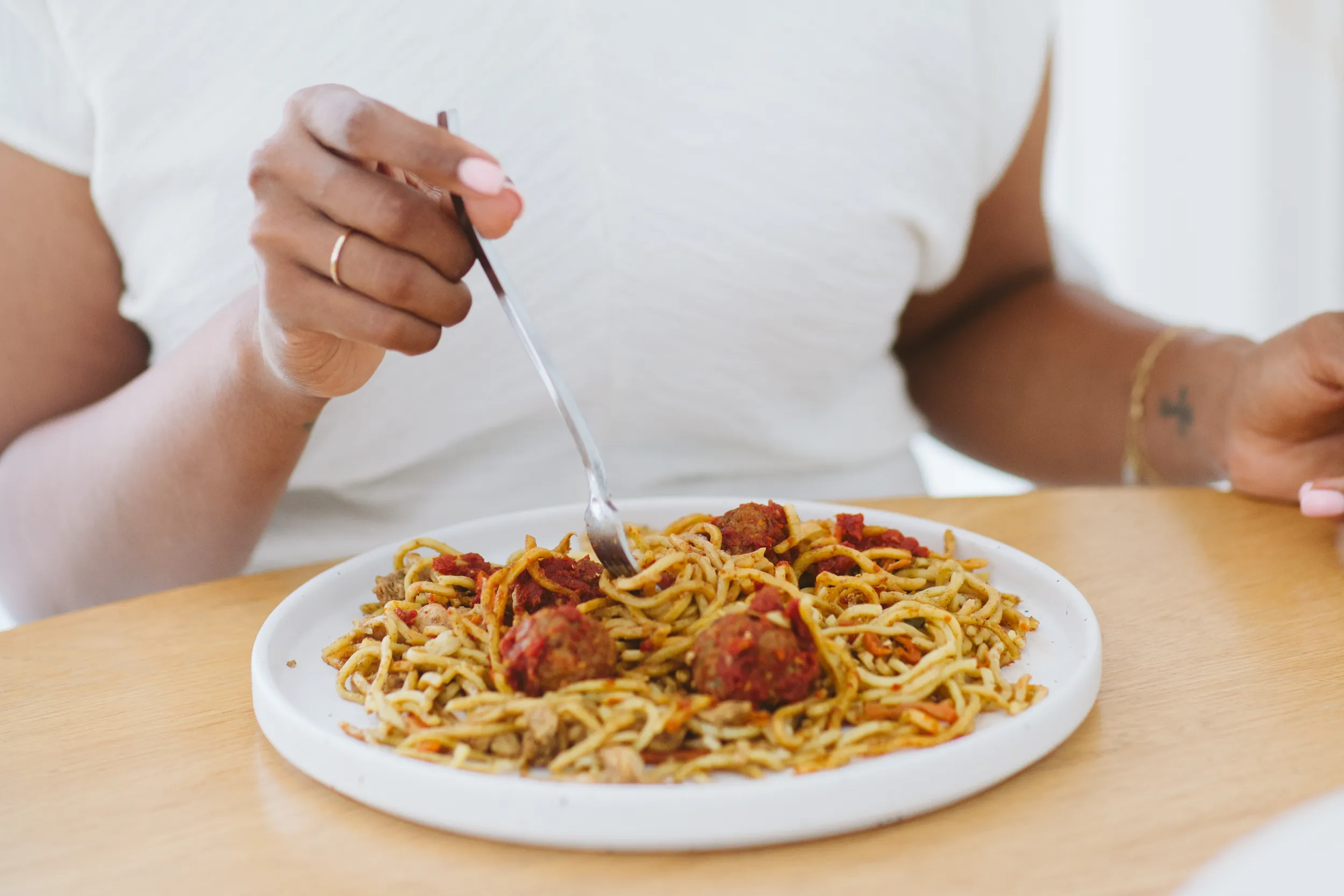
Weight loss injections have completely changed the way people experience fat loss.
Appetite drops. Food noise quiets down. The scale finally starts moving. And for a lot of people, it feels like relief. Like something has finally clicked into place.
“Maybe this is it. Maybe this is what I’ve been missing.”
But then, something more subtle starts to show up. The medication is still working. You’re eating less. Yet your relationship with food doesn’t feel fully settled.
You might notice moments where:
- you still reach for food when you’re stressed
- certain habits quietly return
- food thoughts start creeping back in
- the anxiety around food never really left
And the question becomes: “If my appetite is under control… why does this still feel unfinished?” Because appetite was never the whole story.
What GLP 1 and GIP Medications Actually Do
Medications like GLP 1 and GIP receptor agonists such as Mounjaro and newer options like retatrutide are incredibly effective at one thing.
They change your physical experience of hunger.
They work by:
- reducing appetite
- slowing digestion
- increasing fullness
- lowering how much you eat overall
And because of that, weight loss becomes easier. You are no longer fighting constant hunger. But here is the part most people do not realise. They change how much you want to eat. They do not fully change why you eat.
Why Emotional Eating Still Shows Up
Even with a reduced appetite, emotional eating can still exist. Because emotional eating was never about hunger in the first place. It is about how you cope.
It shows up in moments of:
- stress
- overwhelm
- boredom
- loneliness
- pressure or mental exhaustion
Food becomes a way to shift your state. To calm down. To escape. To soften something uncomfortable.
So even if you are eating less overall, you may still find yourself:
- going to food when emotions spike
- eating when you are not physically hungry
- using food as relief, not nourishment
The volume changes. But the pattern underneath can stay the same.
Why Food Noise Often Comes Back
One of the biggest initial wins with injections is how quiet things feel. For the first time, your mind is not constantly looping around food. But over time, many people notice something interesting. The noise does not fully stay gone. It might come back more subtly. More quietly. But enough to feel familiar. This happens because food noise is not just physical. It is also learned.
Your brain still holds:
- habits you have repeated for years
- emotional links between food and relief
- automatic coping patterns
So when your body adapts, or the initial novelty fades, those patterns can resurface. Not because the medication failed. But because those patterns were never addressed.